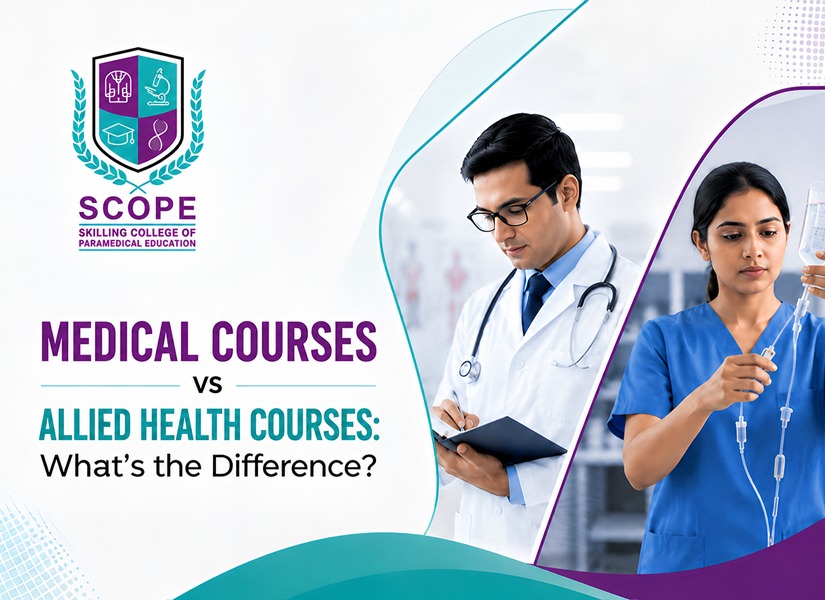
For a long time, students held the misconception that a healthcare career could only be built by pursuing medical courses. Turns out, allied health courses have started gaining popularity. Both choices lead to a career in medicine but differ in the scope of those careers. In this guide, we’ll lay out the difference between medical and allied health courses, and explain their eligibility, career opportunities, salary potential, and how to choose the right path based on your interests and career goals.
What are Medical Courses?
Medical courses are generally long-term healthcare programs that train students to become licensed healthcare professionals who diagnose illnesses, prescribe treatment, and perform surgeries. To list some of the most popular medical programs:
- MBBS (Bachelor of Medicine and Bachelor of Surgery)
- BDS (Bachelor of Dental Surgery)
- BAMS (Bachelor of Ayurvedic Medicine and Surgery)
- BHMS (Bachelor of Homeopathic Medicine and Surgery)
- BUMS (Bachelor of Unani Medicine and Surgery)
To pursue medical courses after 12th, aspirants generally have to take the NEET exam. The exam score serves as the basis for admissions to most medical colleges. Medical professionals often work in hospitals, clinics, research institutions, and public healthcare organizations.
What are Allied Health Courses?
Allied Health courses are usually short-term programs that train students for specialized operations in the medical field. Graduates work in allied healthcare careers that provide diagnostic, technical, and clinical support to help doctors deliver effective healthcare. Some of the best allied health courses include:
- Medical Laboratory Technology
- Radiology
- Operation Theatre Technology
- Cardiology Technology
- Emergency Medical Technology
Students don’t necessarily have to take any entrance exams to pursue allied health courses after 12th. They can pursue short-term programs and work alongside physicians, surgeons, nurses, and other healthcare teams to ensure quality patient care.
Medical Courses vs Allied Health Courses
| Feature | Medical Courses | Allied Health Courses |
| Primary Role | Diagnose and treat patients | Support diagnosis and treatment |
| Typical Qualification | MBBS, BDS, BAMS, BHMS, etc. | Diploma, BSc, BVoc |
| Course Duration | Around 4.5–5.5 years or more | 1–4 years (depending on the course) |
| Entrance Requirement | Often requires NEET for many programs | Varies by course and institution |
| Patient Interaction | High | Moderate to limited, depending on the specialization |
| Work Environment | Hospitals, clinics, healthcare centres | Hospitals, diagnostic labs, imaging centres, emergency units |
| Career Focus | Patient diagnosis and treatment | Diagnostic, technical, and clinical support |
Medical Courses Without NEET: Are They Available?
Many students think they can’t pursue a career in medicine if they don’t take NEET. Definitely, you can’t pursue courses like MBBS and BDS that strictly require NEET for admission in India. But allied healthcare careers are a great shot for such students. They can work in hospitals, laboratories, imaging centres, and other healthcare settings by pursuing reputed allied health programs.
Medical vs Allied Health Career Scope
| Medical Courses | Allied Health Courses |
| Hospitals | Government/Private hospitals |
| Clinics | Specialty clinics |
| Private practice | Diagnostic laboratories |
| Medical research | Research laboratories |
| Teaching | Imaging centres |
| Public health | Emergency care services |
| Blood banks |
Medical vs Allied Health Salary
Before comparing the salaries of medical and allied health professionals, it is necessary to know that earnings depend on multiple factors, including specialization, experience, employer, location, and professional skills.
Medical professionals enjoy lucrative salaries in the long term. But they have to put in a significant amount of time and effort to get to that point.
Allied Health professionals also earn competitive salaries, and they can enter the health workforce earlier than medical professionals. If they gain experience, pursue advanced certifications, and specialize in high-demand areas such as radiology, medical laboratory technology, or cardiology technology, they improve their overall earnings.
Which Should You Choose?
| Medical Courses | Allied Health Courses |
| Want to become a doctor | Want to begin your healthcare career sooner |
| Are comfortable with a longer academic journey | Enjoy laboratory sciences or medical technology |
| Are prepared for competitive entrance examinations | Prefer technical and diagnostic roles |
| Enjoy diagnosing and treating patients directly | Want to specialize in a specific area of allied healthcare |
Conclusion
Today, medical courses are not the only way to pursue a medical career. Modern allied health courses offer extensive opportunities, a broad scope for growth, competitive salaries, and quick workforce entry. If you are clear about becoming a doctor, you should choose medical courses. But if you’re just passionate about healthcare courses after 12th that offer practical learning and quick entry, allied health programs offer excellent opportunities.