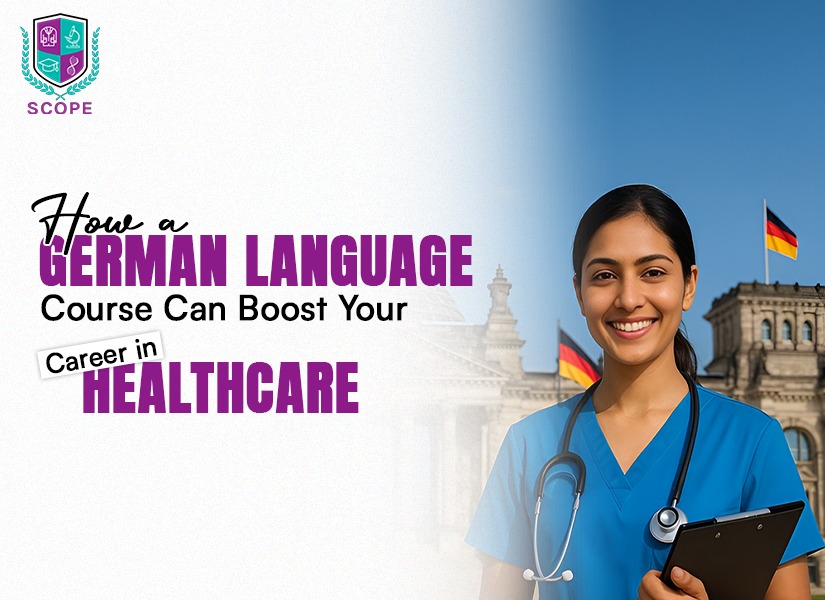
What if you were told that a German language course can maximise your healthcare career prospects? You might disregard the statement and consider it a claim in the void. But in reality, Europe is facing a healthcare workforce shortage, and who better than skilled and affordable Indian medical professionals to fill the gap. If you are a nurse, lab technician, caregiver, physiotherapist, or any other allied health worker, your ability to speak and write German can land you in well-paying roles across German hospitals and care homes. Whether you’re a student or a working professional, this blog will guide you on how a German language course can dramatically expand your opportunities, salary potential, and long-term career growth.
Why the German Language Matters in the Healthcare Industry
The main reason is that if you want to work in Germany, which is an excellent healthcare market. There, you would require patient interaction, accurate communication, and teamwork—all of which will necessitate German language proficiency as a prerequisite. To elaborate on this, the German language for healthcare is crucial because:
- Germany’s healthcare sector is restricted to individuals with at least a B1 or B2 level of German proficiency.
- German is a must, as you need to understand patient concerns, read medical notes, and communicate with colleagues.
- Hospital systems, case sheets, prescriptions, and documentation are all in German.
- Speaking German improves workplace integration and reduces communication errors.
- As a German speaker, you will generally receive higher salaries and faster promotions.
Benefits of Learning German for Medical Professionals
Better Job Opportunities in Germany
Germany has a severe staff shortage. German language expertise puts you ahead of other candidates who apply for the same positions.
Higher Salary Packages
Since we are dealing with cross-continental economies, nurses, for example, can often earn €2,500 to €3,500 (equates to around ₹2.5-3.5 lakhs) per month.
Migration Pathway to Europe
With German proficiency, you can work not only in Germany but also in:
- Austria
- Switzerland
- Luxembourg
- Belgium
Easier Permanent Residency (PR)
Healthcare professionals with language skills have a smoother PR pathway.
Better Communication & Patient Safety
Healthcare professionals need to be exceptional communicators. Better proficiency in German helps professionals deliver safer, more effective care.
Why German is Essential for Nurses
Nursing is among the most in-demand healthcare professions in Germany. Here’s why a German language course for nurses is so important:
- Nurses are required to meet the B2-level German proficiency requirement for a recognised learning license.
- Daily tasks—collecting case history, administering medication, and patient monitoring—require fluency.
- Nurses have the highest patient interaction, making German a must for empathy and accuracy.
- Recruiters prioritise German-speaking nurses, and they receive faster visa approvals.
- German hospitals might sponsor relocation and onboarding for German-speaking nurses.
Levels to Learn German for Medical Professionals
The following pathway is based on a German language course in Mumbai and lasts 10 months.
A1 Level (Beginner)
- Basic greetings and introductions
- Simple daily conversations
- Basic vocabulary for healthcare settings
A2 Level (Elementary)
- Everyday workplace discussions
- Understanding hospital instructions
- Forming slightly complex sentences
B1 Level (Intermediate)
- Describing symptoms, conditions, and patient requirements
- Understanding workplace communication
- Preparing for interviews
B2 Level (Upper Intermediate)
- Required for nursing license recognition
- Professional communication with patients & doctors
- Writing, reading, and understanding medical documentation
Career Opportunities After Learning German
Healthcare Roles
- Registered Nurse
- Elderly Care Nurse
- ICU/OT Nurse
- Pediatric Nurse
- Psychiatry Nurse
- Emergency Nurse
Allied Health Roles
- Healthcare Assistant
- Geriatric Care Provider
- Physiotherapy Assistant
- Rehabilitation Support Staff
Medical Technician Roles (with certification updates)
- Lab technicians
- Radiology technicians
- Dialysis technicians
Salary Range
Most healthcare professionals in Germany earn around €2,000–€3,500 per month (which approximately corresponds to ₹2-3.5 lakhs every month). Based on your experience and specialisation, you might fall in the upper or the lower range.
How to Choose the Right German Language Course
When selecting a German language course for future healthcare prospects, make sure you go through this checklist:
- Curriculum covers modules similar to a German language A1-B2 course in Mumbai
- Medical-purpose German training
- Goethe/ÖSD/TELC exam preparation
- Certified and experienced trainers
- Speaking practice + interactive training
- Affordable fees and flexible batches
- Support for interview and visa preparation
Conclusion
Learning German is one of the most thoughtful decisions you can make as a healthcare aspirant or professional. Consider this your chance to secure international roles as a nurse, technician, or medical student, opening up global opportunities, higher salaries, and long-term career security. Choose a well-designed course that helps you start your journey confidently and build a strong future in Germany’s booming healthcare sector.