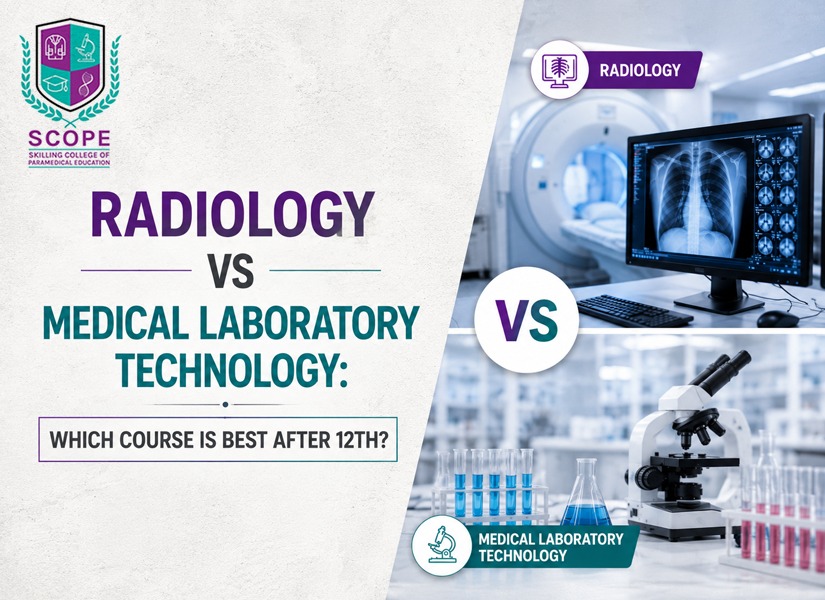
The terms radiology and medical laboratory technology are often used interchangeably. In the broader sense, it makes sense. Both are essential instruments to diagnose, monitor, and treat diseases. But when we discuss these fields in the scope of their careers, there’s a clear difference that should be highlighted for students who are interested in one of the two allied health courses. In this guide, we will help you understand the Radiology vs Medical Laboratory Technology difference, and what each course offers, the skills required, career opportunities, salary prospects, and which option may be the right fit for your interests and career goals.
What is Radiology?
Radiology refers to the branch of medicine that deals with medical imaging equipment to diagnose diseases and guide treatment. Radiology professionals work closely with doctors and other medical professionals, providing imaging reports that decide the course of treatment. They use technologies such as:
- X-ray
- CT Scan
- MRI
- Ultrasound
- Mammography
Students who want to pursue a Radiology course after 12th have various course options. A good Radiology course focuses on combining classroom learning with extensive practical training on imaging equipment to prepare radiology professionals.
What is Medical Laboratory Technology (MLT)?
A medical laboratory technology course focuses on building professionals who are capable of using specialized laboratory equipment to diagnose and treat diseases. It should be noted that they use biological samples and not imaging, unlike radiology professionals. MLT students specialize in:
- Microbiology
- Haematology
- Blood banking
- Immunology
- Clinical chemistry
- Molecular biology
- Cytotechnology
- Histotechnology
Difference Between Radiology & Medical Laboratory Technology
| Feature | Radiology | Medical Laboratory Technology |
| Primary Focus | Medical imaging | Laboratory diagnostics |
| Work Area | Imaging department | Clinical laboratory |
| Equipment Used | X-ray, CT, MRI, Ultrasound | Microscopes, analyzers, laboratory instruments |
| Patient Interaction | Moderate to High | Limited |
| Popular Courses | Diploma, BSc Radiology | DMLT, BSc Medical Laboratory Technology |
| Nature of Work | Capturing diagnostic images | Testing and analyzing clinical samples |
| Core Skills | Technical operation, patient handling | Analytical thinking, precision, laboratory procedures |
| Career Growth | Excellent | Excellent |
Which Course Should You Choose?
There isn’t a best allied health course after 12th. However, if you are confused about the course you should choose, the following table will be an immense help.
| Radiology | Medical Laboratory Technology |
| Are interested in medical imaging technology | Like conducting scientific investigations |
| Enjoy operating sophisticated diagnostic equipment | Have strong observation skills |
| Prefer working directly with patients | Enjoy working with laboratory equipment |
| Can follow safety protocols carefully | Prefer analytical tasks over direct patient care |
| Want to work in fast-paced hospital environments | Are interested in disease diagnosis through testing |
Career Opportunities & Salary Comparison
| Employment Area | Radiology | Medical Laboratory Technology |
| Hospitals | ✔ | ✔ |
| Diagnostic Centres | ✔ | ✔ |
| Research Institutes | Limited | ✔ |
| Blood Banks | ✖ | ✔ |
| Imaging Centres | ✔ | ✖ |
| Pharmaceutical Companies | Limited | ✔ |
Radiology
The average salary for a fresher in the radiology field is expected to range from ₹2 to 5 lakhs per annum. Graduates of a radiology technician course can secure the following roles:
- Radiology Technician
- MRI Technician
- CT Scan Technician
- Imaging Technologist
- Diagnostic Imaging Executive
Medical Laboratory Technology
The pay for a medical laboratory technology can range anywhere from ₹2.4 to 3 lakhs in a year. Such salaries can be secured for the following roles:
- Lab Technician
- Lab Technologist
- Lab Supervisor
- Lab Manager
Conclusion
Both radiology and medical laboratory technology are excellent allied healthcare careers. However, it should be clear that courses in both fields achieve different objectives. While radiology focuses on diagnosis through imaging equipment, medical laboratory technology conducts diagnosis through lab procedures and biological samples. Ultimately, the best course is the one that aligns with your interests, strengths, and long-term career aspirations.