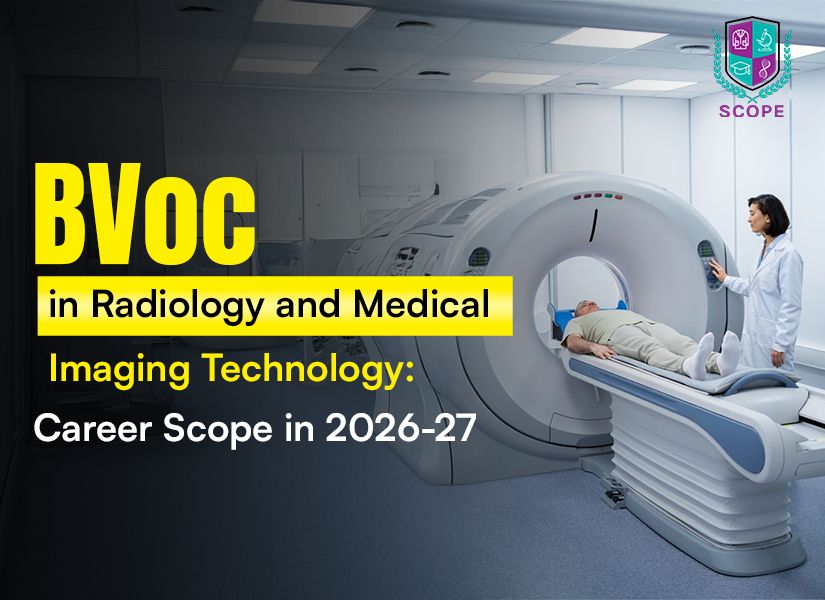
In the present time, radiology and medical imaging technology are a necessary part of healthcare systems, used to bring accuracy to diagnosis and detect diseases or problems in different parts of the human body at an early stage. Because healthcare is a field whose demand and growth can be restricted, the demand for skilled imaging professionals to play their part in the system is growing steadily. To benefit from this demand, students plan to enroll in a BVoc Radiology and Medical Imaging Technology course.
Why is a Career in Radiology and Medical Imaging Technology Rewarding?
A career in radiology and medical imaging is considered rewarding not only due to the earning potential of a professional in this field but also the rapid growth of the sector itself. This growth of the sector is expected to continue with a significant pace in 2026, leading to an increase in the number of professionals, too. Additionally, with the growth of this sector, if you pursue BVoc Radiology after 12th, you can find a well-paying job across:
- Government and private hospitals
- Diagnostic laboratories
- Multi-specialty clinics
What is the Career Scope in BVoc Radiology After 12th?
The Bachelor of Vocational in Radiology and Medical Imaging Technology is a course made for 10th pass students with any diploma or 12th pass students with a diploma, particularly in Radiology and Medical Imaging Technology. After pursuing this course, there are several well-paying entry-level career options one can find. Once you complete this UG course, you can work as:
- Radiology Technologist
- X-Ray Technician
- CT Scan Technician
- MRI Technician
- Imaging Assistant
- Diagnostic Lab Technician
| Job Role | Average Monthly Salary for Freshers (India) |
| Radiology Technologist | ₹18,000 – ₹28,000 |
| X-Ray Technician | ₹15,000 – ₹22,000 |
| CT Scan Technician | ₹20,000 – ₹30,000 |
| MRI Technician | ₹22,000 – ₹35,000 |
| Imaging Assistant | ₹12,000 – ₹18,000 |
| Diagnostic Lab Technician | ₹14,000 – ₹22,000 |
What Skills Are Taught in the Radiology and Medical Imaging Technology Course?
Success in radiology depends equally on your qualification as well as the skills you gain during the curriculum of that qualification. Being one of the biggest UG paramedical courses in demand 2026, below are some practical and relevant skills the BVoc course teaches you.
- Technical Skills – Knowledge of imaging modalities like X-ray, CT, MRI, Ultrasound, understanding of radiation physics, patient positioning techniques, image quality assessment, and equipment calibration basics
- Soft Skills – Clear communication with patients, empathy, patience, ability to work under pressure, and coordination with doctors and nurses
- Safety and Compliance Awareness – Use protective shielding, maintain exposure records, and ensure compliance with safety standards
What Are the Responsibilities of a Radiology Technologist?
As the job title and the curriculum of the BVoc Radiology and Medical Imaging Technology tell you, you need to operate imaging equipment as a radiology technologist. A considerable number of students who pursue this graduation go on to occupy the role of a radiology technologist. If you wish to occupy this role too, your core responsibilities in this position would include:
- Interpreting X-rays, CT, MRI, and ultrasound images
- Providing diagnostic reports
- Guiding interventional procedures
- Consulting with physicians
- Ensuring imaging quality standards
Industry Trends Influencing Career Scope
It is a known fact that the field of radiology and imaging is consistently growing along with the career scope in these fields. However, not everyone knows the factors influencing it, which are as follows:
- Increased Awareness and Need – Tier 2 and Tier 3 cities are witnessing growth in the number of private imaging labs due to increased need and awareness for healthcare facilities.
- Digital and AI Integration – Artificial Intelligence tools are being integrated into imaging software for preliminary detection support.
- Preventive Healthcare Growth – Routine screenings such as mammography, CT scans for lung screening, and cardiac imaging are increasing.
Conclusion
There are a variety of paramedical courses one can pursue to benefit from the growing demand for professionals in the healthcare sector. One of the most preferred courses for the same is BVoc in Radiology and Medical Imaging Technology. This course offers a practical, skill-driven pathway into one of the most essential segments of modern healthcare, promising well-rewarding career opportunities after graduation, too.
If you are an aspirant wishing to pursue this course, contact Scope College to get your training started and end on a positive note.
FAQs
1.What is a BVoc in radiology medical imaging technology?
A BVoc in Radiology and Medical Imaging Technology is a 2 or 3-year-long UG course that teaches you about medical imaging technology used in diagnosing and treating medical conditions of the human body.
2.What after BVoc Radiology?
After completing your BVoc Radiology course, you can pursue higher studies or start your professional career as a radiology technologist, X-Ray, CT Scan, or MRI technician, imaging assistant, or a diagnostic lab technician.
3.Is a radiology tech the same as a radiologist?
No, a radiologist and a radiology technologist are not the same. While a radiology technologist has to operate and maintain all the equipment, a radiologist supervises them, along with interpreting medical images, diagnosing patients, and giving the appropriate treatment.