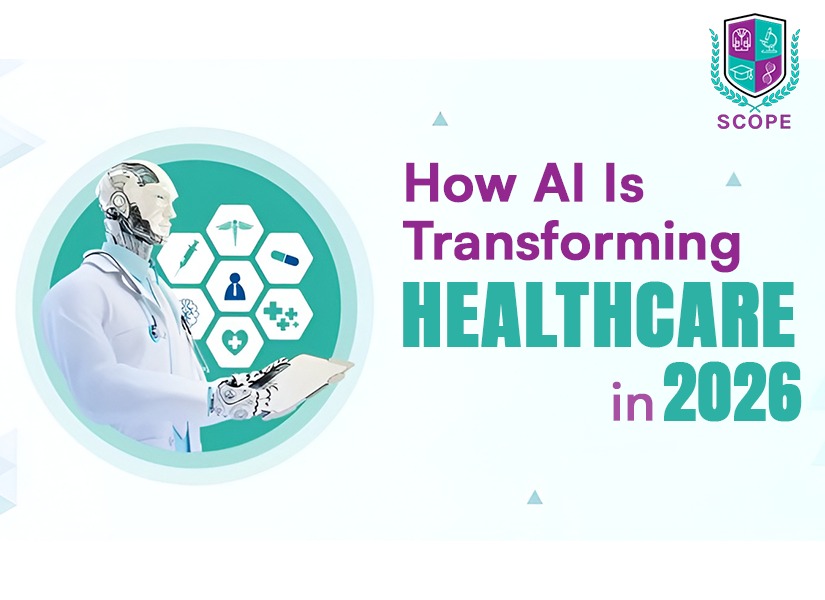
At present, no sector is untouched by the impact of AI, including even the most essential facilities for humans, like healthcare. Among trending digital health technologies, AI benefits humans in several ways, such as enhancing patient safety and accessibility, generating medical reports, and enabling predictive analytics. The integration of AI for functions like these massively improves operational speed and efficiency, enabling the delivery of care to patients in the best possible form.
Innovations Regarding AI in Healthcare
The integration of AI in present-day healthcare comes with a broad scope for innovation. This innovation is resulting in more innovative and efficient clinical and administrative functions.
Generative AI
Among the countless ways of innovation regarding AI, the use of generative AI brings the most significant technological leaps in healthcare. It works alongside healthcare professionals to automate their tasks with maximum efficiency and minimum errors, instead of eliminating the need for those human experts.
- Generative AI can summarize a patient’s medical history, discharge notes, etc., reducing the documentation work of a human expert.
- It can analyze symptoms and provide a suitable diagnosis.
- Generative AI in hospital management is used in the form of AI chatbots that provide 24/7 support for booking appointments, answering inquiries, and more.
Computer Vision
Computer vision is used to analyze medical images from various diagnostic tests. It has become a core technology in modern hospitals, supporting diagnostic imaging, surgical planning, and patient monitoring simultaneously.
- AI tools can analyze X-ray, CT, MRI, and ultrasound results to detect abnormalities.
- There are several dermatology apps powered by computer vision that can identify skin disease risks and aid diagnosis.
- Specialized eye-care tools are used to analyze a human retina for signs of diabetic retinopathy or glaucoma.
Natural Language Processing (NLP)
Humans commonly struggle to understand unstructured medical text in doctors’ prescriptions. Natural Language Processing (NLP) works to eliminate that complaint by transforming unstructured medical text into understandable, searchable, and actionable information.
- Voice-enabled NLP systems transcribe doctor–patient interactions into structured Electronic Health Record (EHR) notes instantly.
- NLP extracts insights from unstructured text in doctor notes, prescriptions, and discharge summaries, making the data easily understandable and searchable.
AI-Powered Telehealth Facilities
Telehealth facilities help in giving remote care and access to top-tier healthcare facilities to patients sitting anywhere. The integration of AI into telehealth facilities enhances their efficiency, making them more responsive and personalized while improving accuracy.
- AI telehealth tools with webcams help in basic diagnosis by detecting changes in breathing, skin texture, or facial expressions.
- Wearable devices transmit patients’ real-time vitals to remote monitoring platforms and maintain their records.
- AI in telehealth devices can alert doctors or caretakers instantly when abnormal health patterns are detected.
- Patients can also receive AI-guided personalized treatment plans that evolve with their health.
Benefits of AI in Healthcare
As you know about the innovative ways professionals in modern healthcare facilities use AI, you must also learn about the benefits that arise due to the role of AI in healthcare. These benefits majorly involve the enhancement of clinical precision, patient experience, and hospital efficiency.
In Diagnostics
The use of AI in diagnostics significantly enhances the speed and precision of diagnosis, enabling the quick detection of diseases. These benefits assist the role of radiologists, pathologists, and clinicians in minimizing any diagnostic delays and preventing misinterpretation.
- AI tools are used to analyze medical images in a few seconds to flag abnormalities with high accuracy.
- AI algorithms detect early-stage cancers and chronic diseases to provide quick treatment for better results.
- AI is used in pathology labs to examine biopsy slides and identify cellular deformities.
- AI-powered diagnosis helps in rural and underdeveloped areas where human specialists are unavailable.
In Medicine
After diagnosis, the next stage is treatment of the disease in a human, which obviously involves medication. For medication, AI supports personalized treatment and helps in creating safer and more effective planning tailored to an individual’s needs or conditions.
- AI evaluates a patient’s genetics, lifestyle, and health history to personalize treatment plans.
- Several AI tools are used to remind patients to take medications and track their adherence.
- Machine learning in healthcare is present among models to detect potential side effects by analyzing drug combinations and patient data.
In Automation of Healthcare
Automation with AI in hospital management helps them optimize routine tasks, reduce workload, and improve staff efficiency. All of this results in the smooth functioning of a hospital and higher patient satisfaction.
- Billing and insurance claim processes become faster and more transparent with the use of AI tools.
- Smart scheduling systems reduce waiting time by optimizing doctor availability.
- The use of AI in hospital management ensures smooth admission of patients, bed management, discharges, and room allocations.
For Healthcare Data Management
The functioning of any healthcare body involves carrying a massive amount of patient and staff data. AI plays a crucial role in organizing, analyzing, and securing that data with ease.
- The use of AI helps in integrating EHR, lab reports, and imaging data into a single interface.
- AI-powered cybersecurity systems detect and secure the hospital systems from data breaches.
- Hospital administration typically uses data insights to improve resource planning, staffing, and budgeting.
Future Trends of AI Integration in Healthcare
Despite the various benefits that integrating AI into healthcare bodies provides, it is essential to remember that this list will continue to expand, leading to the rise of various trends in the future. These future trends include data-driven insights, making accurate health-related predictions, and being a part of scalable digital systems.
Predictive Analytics
The process of predictive analytics involves identifying health risks early and helping clinicians make informed decisions. Such an AI use can shift healthcare from reactive to preventive care.
- AI can be used to predict potential medical conditions such as heart failure, sepsis, or stroke before symptoms develop.
- Wearable devices powered by AI can continuously monitor vitals and trigger alerts when dangerous patterns emerge.
- Reduced readmission rates result from early detection of high-risk patients.
Scalability
Several scalable AI solutions allow healthcare institutions to grow in their functioning without an increase in the complexity of operations.
- Cloud-based AI tools can be deployed across hospital bodies with minimal technical setup requirements.
- AI reduces the tasks of human staff as well as dependency on them, supporting them in times of workforce shortages.
- Data sharing between different branches of a hospital ensures seamless patient journeys across cities or states.
Data-Driven Patient Insights
The use of AI helps hospitals in deriving patient insights from a massive volume of data to understand patient behavior, preferences, and treatment responses in depth.
- The reason behind low medication adherence is identified by AI with insights from a given set of data, which helps in designing better strategies.
- The insights help in improving meal plans, medication or treatment reminders, and recovery schedules to improve patient cooperation and experience.
- Hospitals monitor patient satisfaction trends through AI to refine service quality.
Conclusion
As we move into the future, we understand the role of AI in transforming healthcare. Its innovations range from generative AI to computer vision, presenting benefits across diagnostics, medicine, automation, and data management.
If you are an aspirant wishing to enter the medical field in varying positions and work for the diagnosis and treatment of patients, then such uses and trends of AI are a must to learn about. The presence of AI in different domains of healthcare is sure to improve your efficiency, and during your studies, you must know about putting AI tools to the best use in healthcare.
To learn about the role of AI in healthcare, as well as other rising trends and technologies in the sector, Scope College is the best place to enroll. We at Scope College have been offering bachelor’s, diploma, and certificate courses in varying interests for over 12+ years, for you to enter the paramedical field, more specifically, the likes of cardiology, medical laboratory technology, radiology, dialysis, ECG, X-ray, MRI, etc.
The courses offered by us at Scope College come with a curriculum designed to perfectly blend theoretical and practical aspects of your aspired field, taught by a dedicated teaching faculty full of experts, making you job-ready to land a role at one of our 300+ placement partners.
Enroll at Scope College and give wings to your dreams that make you see yourself having a successful career in the paramedical field.
FAQs
Q. What is the current use of AI in healthcare?
In the current times, AI in healthcare serves different purposes, like accurate diagnosis, predicting harmful diseases, patient monitoring, data analysis, and much more.
Q. What is the future of AI in healthcare?
In the future, AI in the healthcare sector would be used for various purposes, like advancements in diagnosis, a more personalized treatment of every patient along with their health monitoring, and early disease detection, along with overall improvement in operational efficiency and minimal human errors.
Q. Will AI replace doctors in 10 years?
No, AI can never replace professional doctors, as the functioning of the human sector depends massively on providing human services to other patients. However, AI will surely change the way doctors work in their daily lives for good.
Q. How is AI used in diagnosing diseases?
In the diagnosis of diseases, AI helps to improve accuracy in radiology, pathology, and endoscopy, enabling faster and more accurate detection of different diseases.
Q. How can AI help telehealth?
In telehealth tools, the integration of AI helps in real-time monitoring of the vitals of an individual and provides remote care to patients.